When Essential Tremor Medication Isn’t Enough: Understanding Your Treatment Options
Essential tremor (ET) is one of the most common movement disorders. It causes involuntary shaking, most often in the hands, especially during activities such as writing, eating, or drinking.
For many people, medication can help reduce tremor symptoms. However, medicines are not effective for everyone. In fact, around half of people with essential tremor do not achieve adequate tremor control with medication alone.
In this article, we explain:
- The main medications used for essential tremor
- Why these medications do not work for everyone
- Current medication shortages affecting some patients in the UK
- What treatment options are available when medication is not effective
Introduction to Essential Tremor
Essential tremor is a chronic neurological condition that affects the nervous system, leading to involuntary, rhythmic shaking of different parts of the body. Most commonly, this tremor appears in the hands, but it can also affect the head, voice, and other areas. As the most common type of movement disorder, essential tremor impacts over one million people in the United Kingdom and millions more worldwide. While the tremor itself is not life-threatening, it can make daily activities like writing, eating, or drinking much more difficult, and may affect a person’s confidence and quality of life. Recognizing the symptoms and understanding the available treatment options are important steps in managing essential tremor and maintaining independence.
Understanding the Condition
Essential tremor is primarily characterized by two types of shaking: kinetic tremor, which occurs during voluntary movements such as reaching for an object, and postural tremor, which happens when holding a position against gravity, like extending your arms. Although essential tremor can affect people of any age, it is most often diagnosed in adults over 40. The condition is usually ‘benign’ (in that the tremor is not associated with any other symptoms) but for some, it can become severe enough to interfere with daily life.

The exact cause of essential tremor remains unclear, but research is ongoing into changes in the brain and its connections as possible contributors. Family history is also important – having a close relative with essential tremor increases your risk, suggesting a genetic component. The National Tremor Foundation is a valuable resource for those affected, offering education, support, and advocacy for individuals and families living with essential tremor.
The most common medications used for essential tremor
In the UK, the first treatments doctors usually try are propranolol and primidone. These medications are recommended in clinical guidance and widely used in neurological practice.
Propranolol and primidone are considered first line treatment for essential tremor. Propranolol is the only therapy approved by the Food and Drug Administration (FDA) for the treatment of essential tremor. Both propranolol and primidone have been proven to be useful in the treatment of essential tremor, with primidone being an anticonvulsant that shows comparable efficacy to propranolol. The combination of propranolol primidone is often discussed as the main medication approach for the treatment of essential tremor.
Although they work in different ways, both aim to reduce the severity of tremor symptoms.
1. Propranolol (a beta blocker)
Propranolol is a type of beta blocker, a medication often used for heart conditions and blood pressure. As a beta blocker, propranolol is one of the primary drugs used to treat essential tremor as it can reduce tremor in some people by blocking certain nerve signals involved in muscle movement.
Propranolol is available in long-acting formulations such as Inderal LA and Innopran XL, which may provide more convenient dosing and sustained symptom control.
Propranolol has been studied in many randomised controlled trials and has demonstrated efficacy in the treatment of essential tremor. About 50% to 60% of individuals experience improvement in tremor with propranolol, but most patients do not achieve total tremor suppression or complete functional recovery.
It is usually prescribed as a daily medication but can sometimes be taken before situations where tremor may be more noticeable, such as social events or presentations.
Clinical studies suggest propranolol can reduce tremor severity in around 50–70% of patients, although the improvement varies.
Common side effects may include:
- Tiredness
- Light-headedness
- Low heart rate
- Breathlessness (especially in people with asthma)
Because of these effects, propranolol is not suitable for everyone.
2. Primidone (an anti-seizure medication)
Primidone is an anticonvulsant medication used to treat both epilepsy and essential tremor. It can reduce tremor by calming overactive nerve signals in the brain.
It is usually started at a very low dose and increased gradually, because taking too much too quickly can cause side effects such as drowsiness or dizziness.
Possible side effects include:
- Sleepiness
- Nausea
- Poor balance
- Cognitive slowing in some people
While primidone may cause unwanted side effects in the short term, these often diminish with longer use.
Some patients tolerate primidone very well, while others find the side effects difficult to manage.
Other medications sometimes used
If the first-line treatments are not effective or cannot be tolerated, neurologists may consider other drugs, including:
- Topiramate (an anti-epileptic drug), which may cause side effects such as sleepiness and mental dullness. Many patients may not tolerate higher doses.
- Gabapentin or pregabalin. Gabapentin has demonstrated mixed results for the treatment of essential tremor, both as monotherapy and add-on therapy. Side effects of gabapentin include weight gain, dizziness, and irritability.
- Benzodiazepines such as alprazolam and clonazepam may help individuals experiencing tremors associated with emotional stress or anxiety, but may cause confusion, memory loss, and sedation.
However, these medications often have less consistent evidence of effectiveness than propranolol or primidone.
Botulinum toxin injections are also regularly used by neurologists to provide temporary relief, most commonly from limb tremor and head tremor.
Why medications don’t work for around 50% of patients
Although medications can help many people, essential tremor is a complex neurological condition. There are several reasons why drug treatment may not work well enough.
1. Essential tremor affects different brain circuits
Essential tremor is thought to involve abnormal signalling within brain networks that control movement, particularly the cerebellum and thalamus. Medication may only partially influence these circuits. These medications work by affecting nerve signals to the muscles, aiming to reduce tremors.
As a result, tremor may improve slightly but not enough to restore normal hand function.
2. Tremor type varies between patients
Some medications work better for hand tremor than for tremor affecting the:
- head
- voice
- jaw
The greatest improvement with essential tremor medication is typically seen in hand tremor, while head tremor and voice tremor are less responsive to treatment.
For example, propranolol tends to be more effective for hand tremor but often has limited effect on head or voice tremor.
3. Side effects limit how much medication can be taken
Many essential tremor medications require higher doses to achieve stronger tremor control.
However, patients may not be able to tolerate these doses due to side effects such as:
- fatigue
- dizziness
- low blood pressure
- cognitive effects
- muscle weakness (especially with treatments like botulinum toxin)
This means treatment may need to be stopped before reaching an effective dose.
4. Tremor may gradually worsen over time
Essential tremor is often a progressive condition, meaning symptoms may slowly worsen over years.
A medication that worked well initially may become less effective as tremor severity increases. As some people develop severe tremor over time, essential tremor medication may not control symptoms as effectively, making it important to discuss alternative treatments with your doctor.
Current UK shortages of propranolol
Some patients in the UK have recently experienced difficulties obtaining certain propranolol formulations.
In 2025–2026, the Department of Health and Social Care issued medicine supply notifications stating that 80 mg and 160 mg modified-release propranolol capsules were temporarily out of stock, with shortages expected to last several months.
When this happens, clinicians may recommend alternatives such as:
- Immediate-release propranolol tablets
- Adjusted dosing schedules
- Switching to primidone or another medication
Patients experiencing difficulty obtaining medication should speak with their GP, neurologist, or pharmacist, who can advise on safe alternatives.
Lifestyle changes that may help
While medication and advanced therapies are important for treating essential tremor, certain lifestyle changes can also help reduce symptoms and improve daily functioning.
- Managing stress is key, as anxiety and high-stress situations can worsen tremor. Practicing relaxation techniques such as deep breathing, meditation, or yoga may help calm the nervous system and relieve tremors.
- Limiting caffeine and avoiding stimulants can also make a difference, as these substances may increase shaking.
- Some people find that small adjustments – like using heavier utensils, wearing wrist weights, or using assistive devices – can make tasks like eating or writing easier.
- Maintaining a healthy lifestyle, including regular exercise and good sleep habits, supports overall well-being and may help manage mild tremor symptoms.
It’s important to discuss any changes with your healthcare provider to ensure they fit your individual needs and medical history.
Complementary therapies for essential tremor
In addition to medical treatments, some people with essential tremor explore complementary therapies to help manage their symptoms. Techniques such as physical therapy and occupational therapy can teach strategies to adapt daily activities and improve hand coordination. Speech therapy may be beneficial for those experiencing voice tremors. Some individuals report that practices like acupuncture, massage, or biofeedback provide relaxation and may help reduce stress-related tremor episodes, although scientific evidence for these approaches is still limited.
When medication isn’t enough
For people whose tremor remains severe despite medication, other treatment options may be considered. Surgical intervention has been used for over 50 years as a surgical option for patients with moderate to severe tremor who do not respond to medication. About 50% of severely affected essential tremor patients have medication-resistant symptoms or are intolerant to medication, making brain surgery an option.
These can include surgical or device-based treatments that target the brain circuits responsible for tremor. Surgery is typically performed on one side of the brain (for example, the left side) to target tremor on the opposite side of the body.
Surgical treatment options may include:
- Deep Brain Stimulation (DBS)
- Focused Ultrasound Thalamotomy (MR-guided focused ultrasound, MRgFUS)
Deep brain stimulation (DBS) is the most common type of surgery for essential tremor and involves implanting electrodes in the brain. DBS has been shown to provide significant and sustained relief from abnormal tremor with long-term benefits.

Focused ultrasound thalamotomy is a relatively non-invasive and incisionless surgical procedure that can treat essential tremor by destroying specific brain tissue in a targeted area of the thalamus. This procedure uses focused sound waves, guided by MRI, to ablate brain tissue responsible for tremor, and is performed on one side of the brain, affecting the opposite side of the body. Unlike traditional brain surgery, focused ultrasound thalamotomy does not require an incision or implanted hardware and is performed while the patient is awake. Adverse events of focused ultrasound may include transient gait disruption, but most complications are mild and resolve on their own.
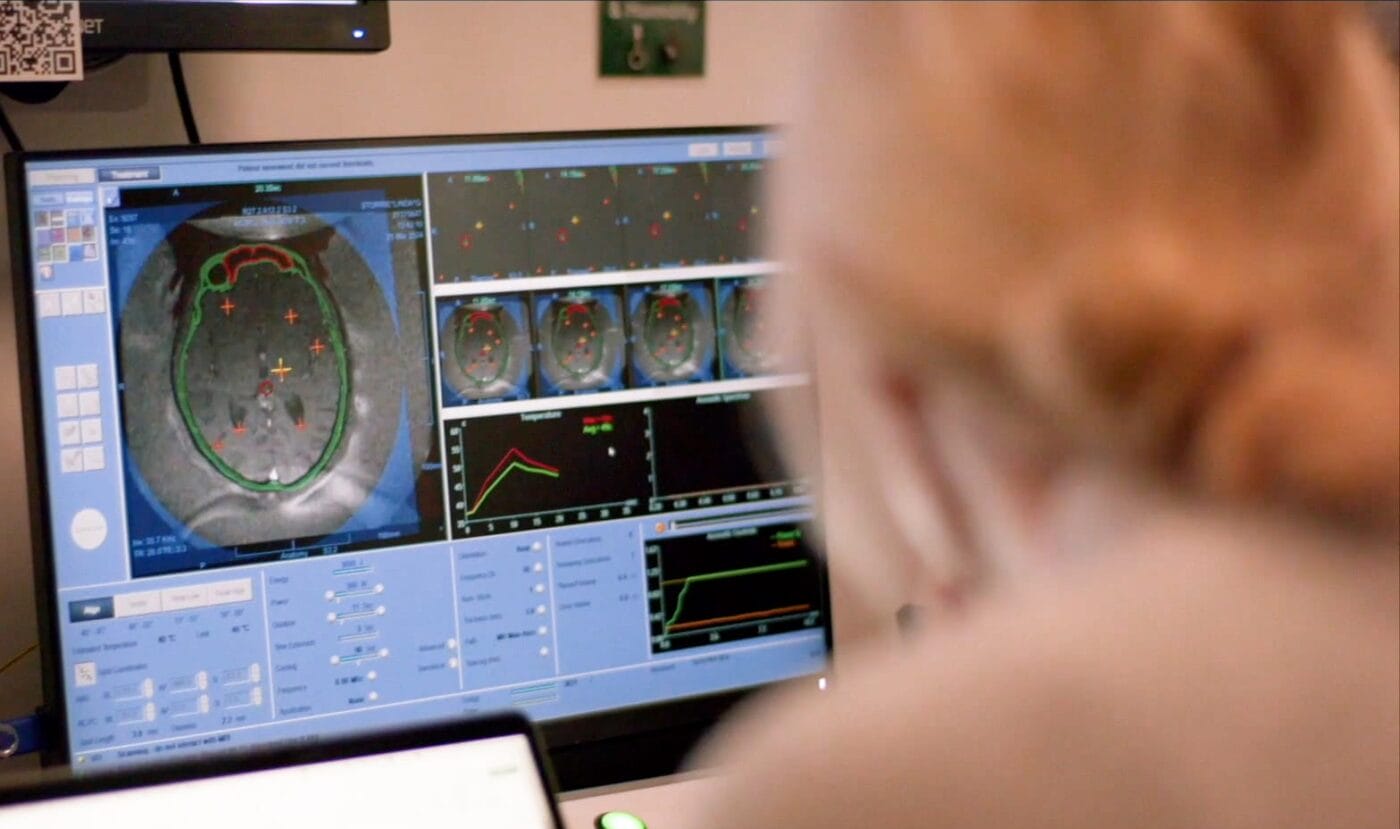
Both deep brain stimulation and focused ultrasound have become increasingly attractive options for people with essential tremor due to limitations of pharmacologic therapies.
For carefully selected patients with medication-resistant essential tremor, these treatments can provide significant and lasting tremor reduction.
When to seek specialist advice
If essential tremor is affecting your ability to perform everyday tasks such as:
- writing
- eating or drinking
- dressing
- working or socialising
and medication has not provided adequate relief, it may be helpful to seek specialist advice.
A movement disorders neurologist can review:
- medication options
- suitability for advanced treatments
- referral to specialist centres
Learn more about advanced treatments for essential tremor at Queen Square Imaging Centre, including MR-guided focused ultrasound.
MORE NEWS